Short answer for a small store: formal A/B/C labels are usually overkill, but the thinking behind them is not. There is also a flaw in how ABC gets taught that hurts small operators specifically.
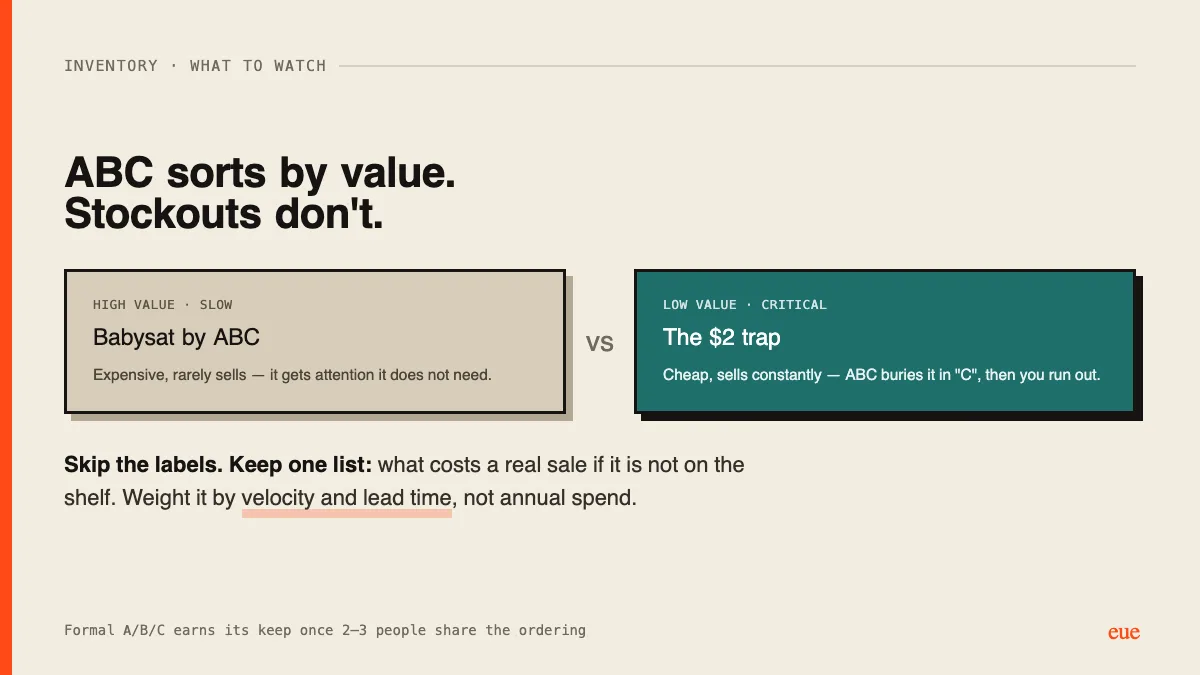
Textbook ABC sorts SKUs by annual dollar value: top ~80% of spend is A, watched closely; the rest is C, left alone. The problem: value and criticality are two different things, and standard ABC only measures value. A cheap item you sell constantly lands in the C bucket and gets ignored, right up until you run out and it costs you sales. Your expensive slow-mover gets babysat while the $2 thing everyone actually buys runs dry.
So for a small operation I would skip the labels and make one list instead: what stops me trading, or costs a real sale, if it is not on the shelf. That is usually a small handful of items. Those get a proper reorder point and a weekly count; everything else runs on eyeballs and a rough par level. Two things make that list better than raw value ranking: weight it by how fast it moves, and factor in lead time (a fast item with a 30-day lead time is far more dangerous than one you can restock in 3 days).
Formal ABC starts earning its keep less at a SKU count and more when two or three people share the ordering with no written rule, then the "obvious" critical items stop being obvious.
For those of you running a few hundred SKUs, do you formally label A/B/C, or just keep a short can't-stock-out list? And how many items end up on that short list?
Few hundred SKUs, no labels.
Just a never-out list. 20-25 items, barely moves month to month. Zero maintenance.
Only wished it was written down once, when a part-timer started ordering and it was all in my head.